Visiting Taputapuātea with attention and respect
Prepare for Raiatea’s UNESCO-listed cultural landscape with historical context, thoughtful questions and care for the place you visit.
In this story
A visit to Taputapuātea is not simply a stop beside a beautiful lagoon. It is an opportunity to pay attention to a place whose significance extends beyond what is immediately visible. Arriving with a little context helps you ask better questions; arriving without the expectation of mastering the story leaves room to listen.
On Raiatea, the site belongs within a wider relationship between land, sea and cultural memory. Give the visit its own space in your day instead of treating it as a photograph to collect on the way somewhere else.
Read enough to understand the setting
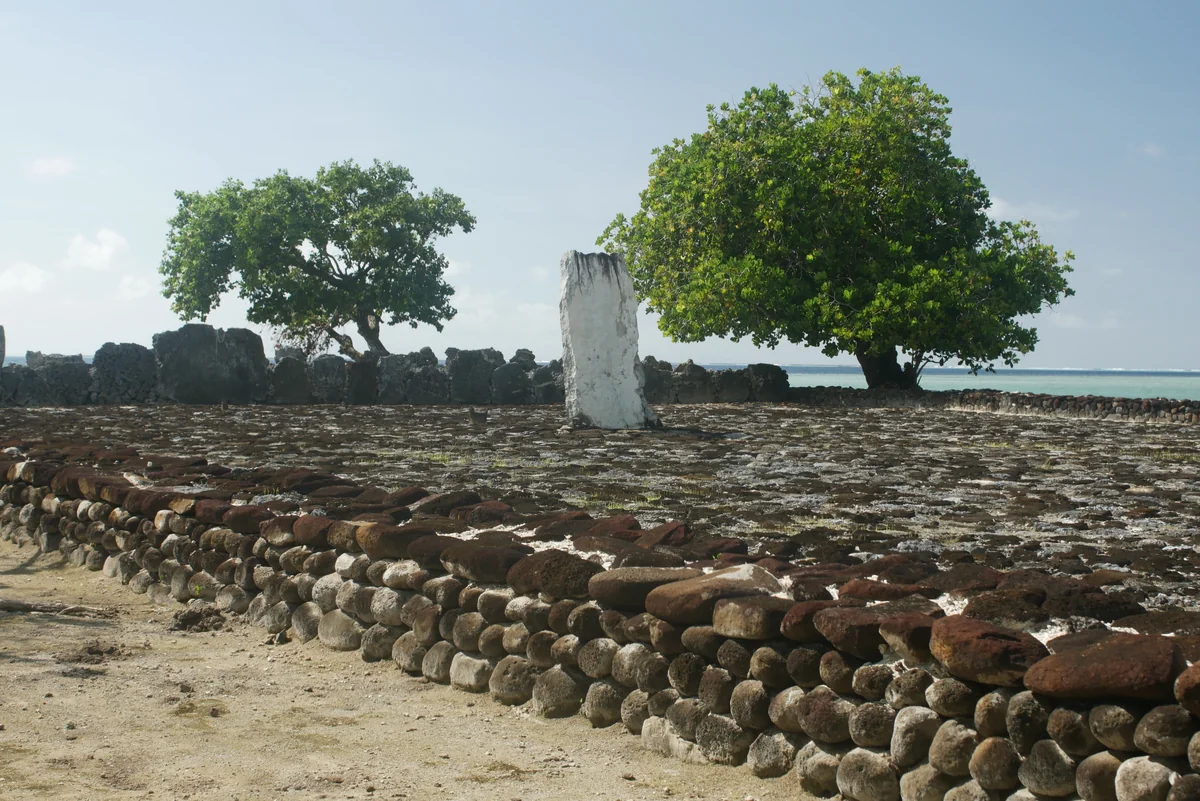
UNESCO inscribed Taputapuātea on the World Heritage List in 2017. Its description includes a marae complex within a larger cultural landscape and seascape, with valleys, lagoon, reef and open ocean. The complex had ceremonial, political and other social functions. This is a useful starting point, but it does not replace local knowledge or current guidance at the site.
Read UNESCO’s official entry before the visit. Rather than memorising every detail, choose two or three questions you would like to understand better. Keep those questions open enough that a guide can explain what they consider important.
Ask how the visit should be approached
If arranging a guide, ask about the meeting point, duration, language and accessibility of the planned route. Explain any walking limitations before booking. Ask whether there are areas you should avoid or particular instructions you should know before arrival.
Once there, follow current signs and the guidance of people responsible for the place. Do not assume that something seen in another visitor’s photograph is permitted. Access arrangements can differ from what an older account describes, and a respectful visit responds to the situation in front of you.
Let a guide add more than dates
Good questions connect the visible setting with its meaning. You might ask how to understand the relationship between the shore and the complex, what visitors commonly overlook, or which words need more careful explanation than a quick translation allows.
Allow time for answers. Avoid turning a conversation into a rapid interview, and accept that some knowledge may not be yours to receive or repeat. A guide is a person sharing expertise, not a searchable database. Ask before making audio or video recordings, even if your intention is simply to remember the explanation.
Keep the physical place undisturbed
Stay within the areas open to visitors. Do not rearrange stones, leave objects or use structures as props for a photograph. If you are unsure where to stand or walk, pause and ask. The fact that an action would take only a moment does not make it appropriate.
Choose clothing and footwear that let you move comfortably and respectfully. Bring what you need for time outdoors, then keep belongings organised so you are not repeatedly interrupting the visit. A little practical preparation makes it easier to give the place your attention.
Photograph after looking
Before raising a camera, spend time observing without a screen. Think about what you are trying to communicate: a wider setting, a detail you have learned to recognise, or your own response to the place. A photograph with accurate context is more valuable than one taken only to prove that you were there.
Ask before including identifiable people, ceremonies or private moments. A public setting does not remove someone’s ability to decline a photograph. If you share an image later, distinguish your interpretation from a guide’s explanation and avoid presenting a short visit as cultural authority.
Leave room afterwards
Do not book the next activity so closely that you spend the visit watching the time. A quiet meal or an unplanned afternoon gives you a chance to reflect. Write down unfamiliar names and the sources you want to read rather than filling gaps from memory.
If the visit changes what interests you, let the rest of the trip respond. You might choose more time with a guide, a museum visit on Tahiti or simply a different set of questions when looking at another place. The point is not to complete a cultural checklist but to travel with greater attention.
Place the visit within a wider journey
Our Raiatea itinerary offers a loose structure for arrival, cultural context and an outdoor day. The Musée de Tahiti et des Îles is another possible point of learning when planning time on Tahiti. Neither replaces the voices of people with a living connection to these places.
For general visitor conduct, Tahiti Tourisme’s responsible travel guidance asks travellers to respect sacred places and seek permission where appropriate. The preparation and reflection prompts in this article are our editorial suggestions.

_Photo_by_Giles_Laurent.jpg)
